
How Appearance Shapes Canine Communication
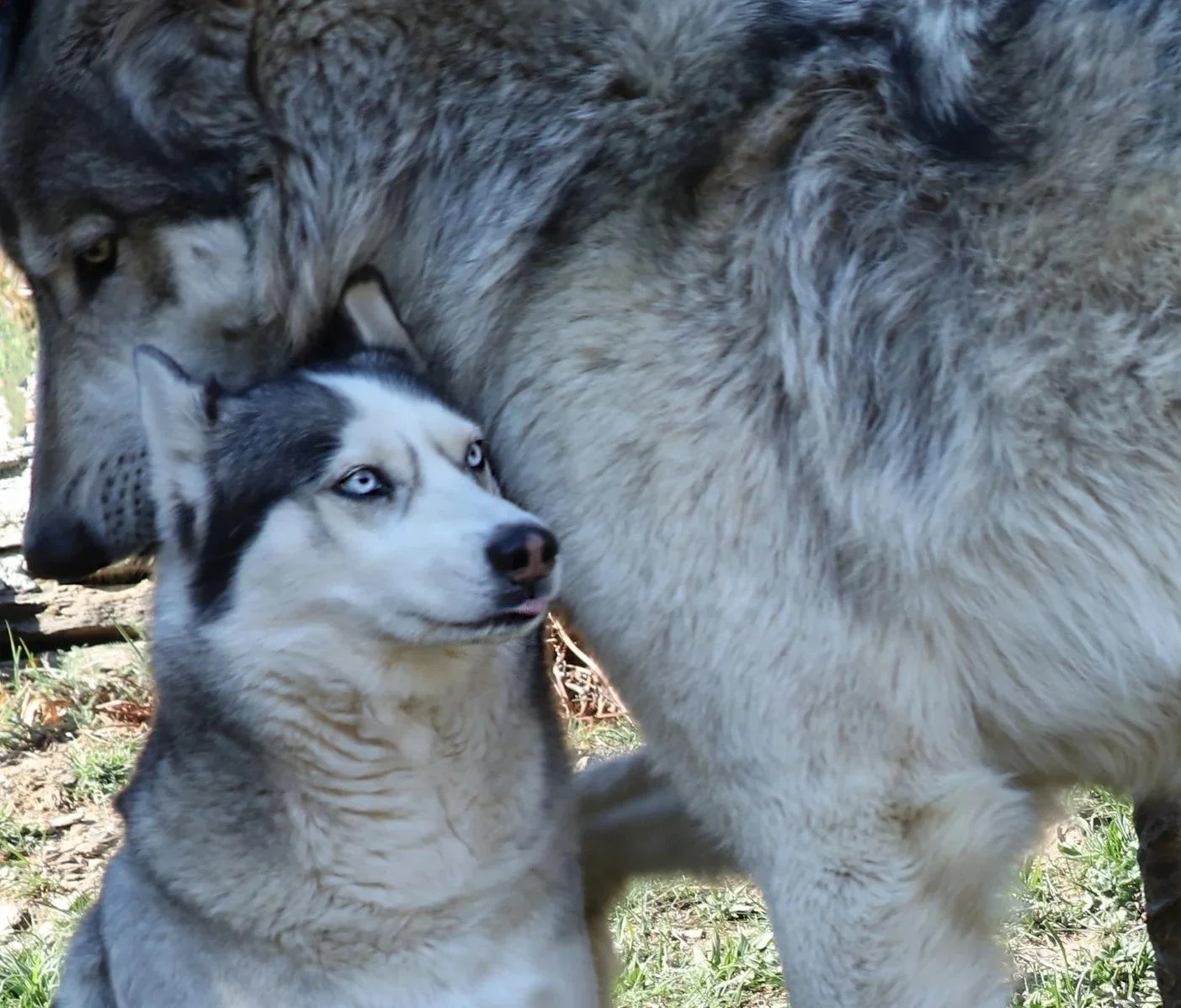
A wolf and a Siberian Husky.
Domestic dogs (Canis lupus familiaris) are the most physically diverse single mammal species on Earth
A Siberian Husky, French Bulldog, Cavalier King Charles Spaniel, Border Collie, Greyhound, and Rottweiler can look so different that it is remarkable they all belong to the same species.
We usually think of those differences as appearance: muzzle length, skull shape, ear carriage, coat, body proportions, tail shape, facial folds.
But dogs communicate through those same physical features.
A dog's face, eyes, ears, tail, posture, and movement are all part of its social signaling system. Their shape and mobility determine what another dog can actually see.
A long tail can display changes in height, direction, tension, speed, and amplitude. A docked tail has much less surface available to display those changes. Erect ears and pendulous ears move through different visible ranges. Hair covering the eyes can conceal shifts in gaze. A shortened muzzle, facial folds, or heavy flews can change how movements of the mouth and face appear.
The physical design of the dog is therefore part of the communication system.
But appearance raises an even more interesting question.
Humans did not create the enormous diversity of modern dogs by changing bodies alone. Throughout their history with us, dogs were also selected for behavior: tolerance of humans, cooperation, hunting, retrieving, herding, guarding, chasing, gripping, companionship, and countless other traits.
So could some of the physical differences we see between dogs also be associated with differences in the behavioral repertoire underneath them?
Could physical morphology alters dog's social communication?
In other words: Does a dog's appearance affect their social skills?
These questions take us deep into the relationship between appearance and behavior.
The modern dog is the product of three overlapping layers of selection:
Domestication shaped the dog's fundamental adaptation to living alongside humans.
Functional selection favored particular physical and behavioral traits according to the work dogs performed.
Modern breed formation standardized populations and intensified specific combinations of appearance and behavior.
These processes occurred at different points in canine history, but their effects accumulate in the dogs we see today.
An ancient developmental change associated with domestication, a behavioral tendency strengthened through generations of working selection, and a physical trait exaggerated during modern breed formation can all exist in the same animal.
That history helps explain why breeds differ so dramatically in the way they look. It also gives us a framework for asking whether some of those visible differences are connected to the way their behavior developed.
And to understand that connection, we first need two important concepts from developmental biology:
paedomorphosis and neoteny.
Paedomorphosis & Neoteny
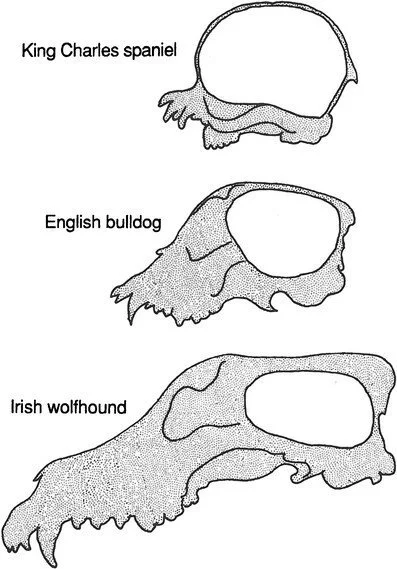
Historical cranial morphology studies, such as Wayne 1986, show this stark contrast in skull shapes between highly paedomorphic breeds and ancestral wolf shapes.
To understand how physical and behavioral traits transform across domestication, evolutionary biology relies on two distinct heterochronic concepts: paedomorphosis and neoteny. While frequently used as synonyms, they represent two halves of a developmental equation:
Paedomorphosis (The Outcome): The retention of ancestral juvenile physical or behavioral traits in an adult organism. It describes what the adult looks like or how it behaves.
Neoteny (The Mechanism): The evolutionary pathway where physical or behavioral maturation slows down relative to sexual development. It describes how paedomorphosis occurs.
Morphological Realignment
Consider proportion changes in human infants: a baby possesses a disproportionately large skull, compact facial features, and prominent eyes relative to its body. If those juvenile proportions persisted into adulthood, the result would be a paedomorphic human.
A wild wolf pup undergoes a similar transition. It begins life with a rounded skull, a short snout, large relative eye orbits, and floppy ears. As it matures into a wild adult, the snout lengthens, the skull becomes angular, and the ears stand erect. When selective pressure retains those juvenile proportions into adulthood, the result is the domestic dog—an adult canid displaying morphological paedomorphosis.
Developmental Strategies: Precocial vs. Altricial
The behavioral impact of neoteny depends heavily on a species' developmental state at birth:
Precocial Species: Born developmentally mature (e.g., horses, deer, antelopes). Within hours, their senses are functional, and they can run to escape predators.
Altricial Species: Born exceptionally helpless (e.g., wolves, humans, dogs). Arriving blind, deaf, and unable to regulate body temperature, their neural, motor, and social architectures develop postnatally during an extended period of social dependency.
Affective Neuroscience & Behavioral Vocabulary
Because altricial species construct their social toolkits after birth, paedomorphosis profoundly alters their emotional regulation. Neuroscientist Jaak Panksepp identified seven primary subcortical emotional systems shared across all mammals: SEEKING, FEAR, RAGE, LUST, CARE, PANIC/GRIEF, and PLAY.
Altricial infants begin life with a minimal subset of these circuits. A newborn puppy’s survival is driven primarily by PANIC (distress crying when separated from warmth) and SEEKING (crawling toward a teat), closely followed by RAGE (the primitive engine of frustration required to compete with littermates for milk). As an altricial animal matures, cortical brain development builds sophisticated pathways over these raw emotional systems—adding emotional regulation, frustration tolerance, and diplomatic conflict-resolution skills.
Behavioral paedomorphosis interrupts this developmental arc, restricting the behavioral vocabulary available to express and regulate those emotions. Just as a full-blown tantrum is developmentally expected in a toddler but indicates impaired social regulation in a twelve-year-old, a paedomorphic adult animal may revert to early-stage behavioral strategies when social tension arises.
The Ontogeny of Canid Signal Acquisition
In wild wolves (Canis lupus), visual social communication develops in a strict chronological sequence:
Neonatal Stage (0–20 Days) — Care-Soliciting & Primitive Signals: Behavior centers almost entirely on nursing, distress crying, and tactile nuzzling. Visual signaling is minimal, limited to basic, non-threatening displays like simple play bows or low tail-wagging.
Intermediate Stage (20–30 Days) — Early Agonistic Displays: As mobility increases, basic self-defense and assertive behaviors emerge, including open-mouthed threats, growls, and basic lip retractions.
Late Stage (30–60+ Days) — Complex Appeasement & Dominance: The most nuanced tools for maintaining hierarchy and resolving conflict develop last. These include subtle facial expressions, muzzle-biting, active submissive crouching, rolling onto the back, and standing over—signals designed to de-escalate tension and prevent physical violence.
Because conflict-resolution and complex appeasement signals are the last to emerge in wild canid ontogeny, slowing down the developmental clock inherently risks truncating the adult signal repertoire.
If domestication slows down an animal's developmental clock, how severely does it impact a domestic dog's ability to communicate? That is precisely what Dr. Deborah Goodwin and her colleagues set out to investigate.
Wolfy Looks
vs. Visual Signals:
The Goodwin Study
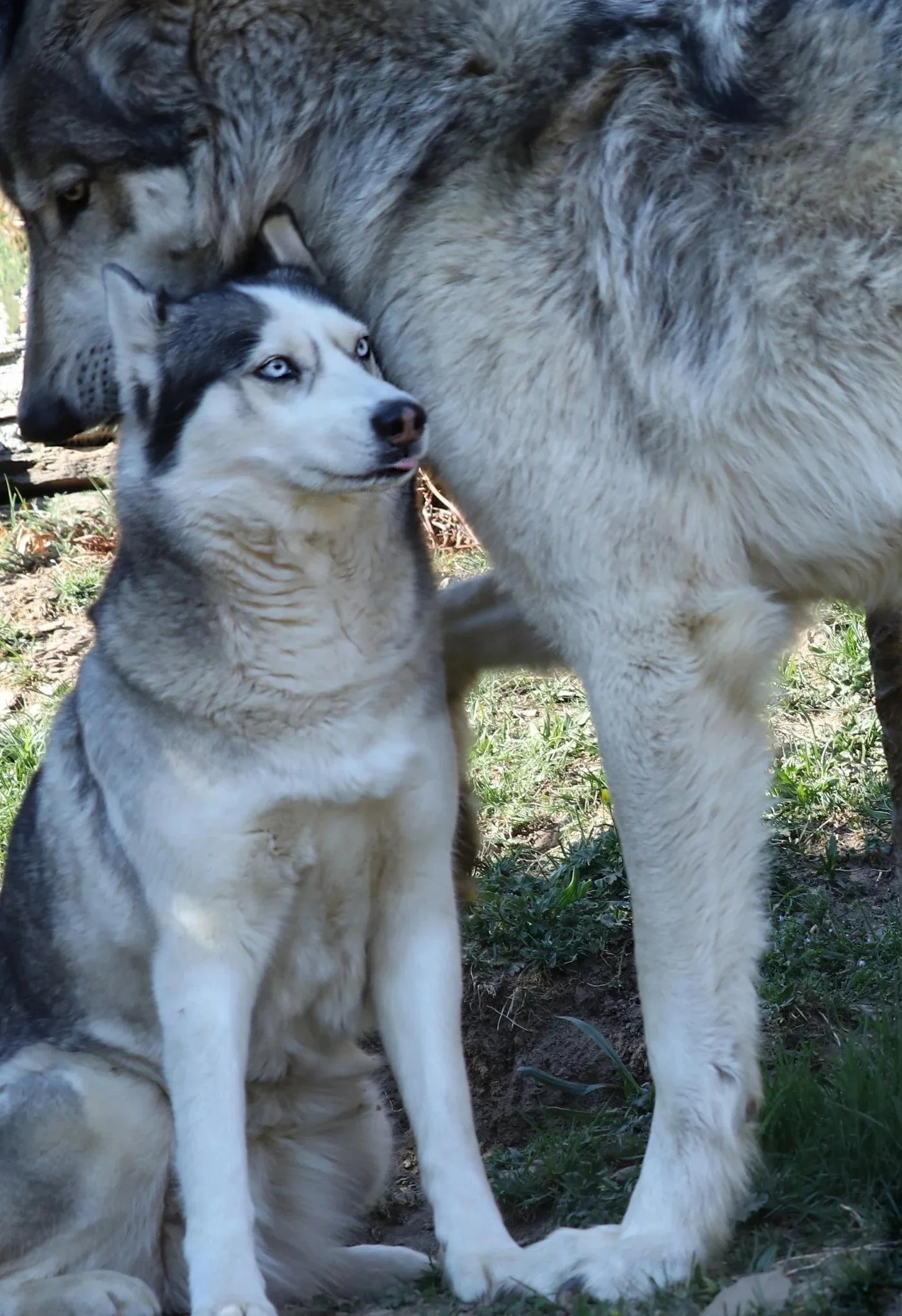
Full size image to give you an idea of the scale. Wolves are massive.
In a landmark 1997 study, Paedomorphosis Affects Agonistic Visual Signals in Domestic Dogs, Dr. Deborah Goodwin and her team in England set out to answer a fascinating question:
How does physical paedomorphosis alter a dog's social communication?
Goodwin, John Bradshaw, and Stephen Wickens studied established social groups from ten dog breeds spanning a broad physical spectrum, from the relatively wolf-like Siberian Husky to the highly paedomorphic Cavalier King Charles Spaniel.
They compared each breed's physical resemblance to a wolf with the number of ancestral wolf-type social behaviors the dogs actually displayed.
The researchers focused on 15 principal behavior patterns used by wolves during escalating displays of threat and submission.
These represented some of the main signals commonly used to regulate agonistic interactions, rather than the wolf’s complete communicative repertoire.
| Threat / Assertive Behaviors | Submission Behaviors |
|---|---|
| Growl | Muzzle lick |
| Displace | Look away |
| Stand over | Crouch |
| Inhibited bite | Submissive grin |
| Stand erect | Passive submission |
| Body wrestle | Active submission |
| Aggressive gape | |
| Bare teeth | |
| Stare |
Ear signals were excluded because differences in ear anatomy between breeds made comparable movements difficult to score reliably.
That detail is already revealing. The ear is an important canine signaling structure, yet selective breeding had altered it so extensively across breeds that the researchers could not use it as a standardized point of comparison.
The Findings
The pattern was striking.
Overall, breeds that looked more physically similar to wolves displayed larger repertoires of wolf-type social signals.
At one extreme, the Siberian Huskies displayed all 15 behaviors observed in the study. At the other, the Cavalier King Charles Spaniels displayed only two.
Wolf puppies acquire these social signals progressively as they mature. Breeds with the smallest repertoires predominantly displayed behaviors that appear earliest in wolf development.
As the breed repertoire became larger, progressively later-developing signals appeared.
Goodwin and her colleagues interpreted this pattern as evidence of behavioral paedomorphism within the agonistic communication system.
In other words, physical paedomorphosis and the retention of an earlier developmental social repertoire appeared to occur together.
The Working-Dog Exceptions
The overall relationship between appearance and signaling repertoire was strong, but several breeds departed from the pattern in interesting ways.
Some working dogs retained more ancestral social behavior than their appearance predicted.
| Breed | Signals Observed | Submission Signals |
|---|---|---|
| Siberian Husky | 15 / 15 | 6 / 6 |
| Golden Retriever | 12 / 15 | 4 / 6 |
| German Shepherd | 11 / 15 | 3 / 6 |
| Labrador Retriever | 9 / 15 | 3 / 6 |
| Large Münsterländer | 7 / 15 | 1 / 6 |
| Cocker Spaniel | 6 / 15 | 1 / 6 |
| French Bulldog | 4 / 15 | 1 / 6 |
| Shetland Sheepdog | 4 / 15 | 1 / 6 |
| Norfolk Terrier | 3 / 15 | 0 / 6 |
| Cavalier King Charles Spaniel | 2 / 15 | 0 / 6 |
Gundogs were particularly interesting.
Golden Retrievers, Labradors, and Cocker Spaniels all displayed comparatively broad repertoires despite their more paedomorphic physical characteristics.
Goodwin and her colleagues suggested that their working history may have contributed to this.
Gundogs traditionally worked in environments requiring close coordination with:
human handlers
other dogs
moving or wounded game
Selection for cooperative work may therefore have helped preserve a larger social repertoire even while the dogs' morphology changed.
Other breeds showed the reverse pattern.
The German Shepherd and Shetland Sheepdog looked more wolf-like than the size of their behavioral repertoire predicted.
The German Shepherd is especially interesting here.
Its erect ears, elongated muzzle, body proportions, and overall wolf-like silhouette give it a strongly ancestral appearance. But that appearance partly reflects later breed selection for a particular physical type, rather than the preservation of an equally complete ancestral behavioral repertoire.
Goodwin herself notes that the German Shepherd was developed from shepherding stock with the deliberate intention of producing a physically wolf-like dog.
So a breed can look highly ancestral because humans selected an ancestral-looking phenotype back into it, while its behavioral development follows a different selective history.
The Golden Retriever demonstrates the opposite possibility: a comparatively paedomorphic appearance accompanied by a surprisingly broad repertoire of ancestral social signals.
This is an important distinction.
Looking wolf-like and retaining wolf-type behavior are correlated traits, but they are not the same trait.
Selection can act on each independently.
And Goodwin measured one side of communication specifically: signal production.
The study tells us which behaviors the different breed groups displayed. The ability of a dog to understand signals it rarely produces itself remains a separate question.
Physical appearance had now given us a clue about the development of social behavior.
Human working selection adds another layer: breeds can also differ dramatically in the motor patterns they are genetically predisposed to perform.
The Predatory Sequence: How Humans Built Working Dogs
Raymond and Lorna Coppinger's work provides one of the most useful frameworks for understanding how humans created different kinds of working dogs.
Predation in canids consists of a series of recognizable motor patterns.
In simplified form:
ORIENT → STARE / EYE → STALK → CHASE → GRAB → KILL → DISSECT → CONSUME
In a wild predator, these behaviors work together toward one biological outcome: locating prey, approaching it, pursuing it, capturing it, killing it, processing it, and consuming it.
Human selection changed the frequency, intensity, and organization of those individual components.
Many working dog populations became specialists in particular portions of the same ancestral behavioral system.
| Working Group | Breed Example | ORIENT | EYE | STALK | CHASE | GRAB | KILL | DISSECT | CONSUME | Working Function |
|---|---|---|---|---|---|---|---|---|---|---|
| Pointing Dogs | English Pointer | ● | ● | ● | — | — | — | — | — | Locate game, fix on its position, and interrupt forward movement in the characteristic point. |
| Herding Dogs | Border Collie | — | ● | ● | ● | — | — | — | — | Use eye, stalking, and controlled pursuit to influence livestock movement. |
| Flushing Dogs | English Springer Spaniel | ● | — | ● | ● | — | — | — | — | Locate hidden game and drive it into movement so the hunter can act. |
| Sighthounds | Greyhound | ● | — | — | ● | — | — | — | — | Detect movement visually and pursue prey at high speed. |
| Retrievers | Labrador Retriever | ● | — | — | ● | ● | — | — | — | Locate fallen game, pursue it, take it into the mouth, carry it, and return it without damaging it. |
| Catch Dogs | Traditional catch-dog types | — | — | — | ● | ● | — | — | — | Pursue, seize, grip, and sustain a hold until the handler can control the animal. |
| Terriers & Vermin-Killing Dogs | Jack Russell Terrier | — | — | — | ● | ● | ● | — | — | Pursue small prey, seize rapidly, bite or shake, and kill efficiently. |
The final components, DISSECT and CONSUME, belong to the full predatory sequence but offered little value in most cooperative working relationships with humans.
The hunter usually wanted the dog to locate, control, retrieve, or kill an animal while leaving the final resource available to the human.
These groups illustrate the central principle:
Humans created specialized working behavior by strengthening some components of an existing behavioral system while suppressing others.
And those behavioral tendencies remain available outside formal work.
A herding dog can stare and stalk without livestock present. A sighthound can chase recreational movement. A retriever can seek out objects to carry. A terrier can orient, grab, and shake during play.
The behavioral history of a breed therefore enters everyday life.
And when those inherited tendencies appear during interactions with another dog, they become part of the communication problem.
Canine "Dialects"
& Communication Handicaps
Producing a signal and understanding one are two different abilities. A dog’s receptive vocabulary may be broader than its expressive one.
Goodwin’s study documented which ancestral social signals dogs from different breeds tended to produce. It measured expression rather than comprehension. Physical paedomorphism may therefore correlate with a smaller expressive repertoire, while the dog’s ability to recognize those missing signals could remain intact.
A Cavalier King Charles Spaniel that rarely displays some of the later-developing, wolf-type signals may still recognize and respond appropriately when another dog uses them. The extent to which this ancestral “dictionary” is understood across breeds remains an open question.
Breed differences in expression can also arise through two additional forces. Selection for work can strengthen particular motor patterns within the predatory sequence, influencing which behaviors a dog is predisposed to perform and how frequently they appea, producing variation in:
social repertoire
working motor patterns
movement style
vocal behavior
play style
signaling frequency and intensity
At the same time, a dog’s anatomy can create a communication handicap, making certain signals physically harder to produce or more difficult for another dog to perceive.
This gives us two distinct but overlapping phenomena:
Dialect: differences in which signals a dog tends to use, how frequently they use them, and how they express them.
Handicap: limitations in how clearly a dog’s body allows those signals to be produced or perceived.
Both can occur in the same dog.
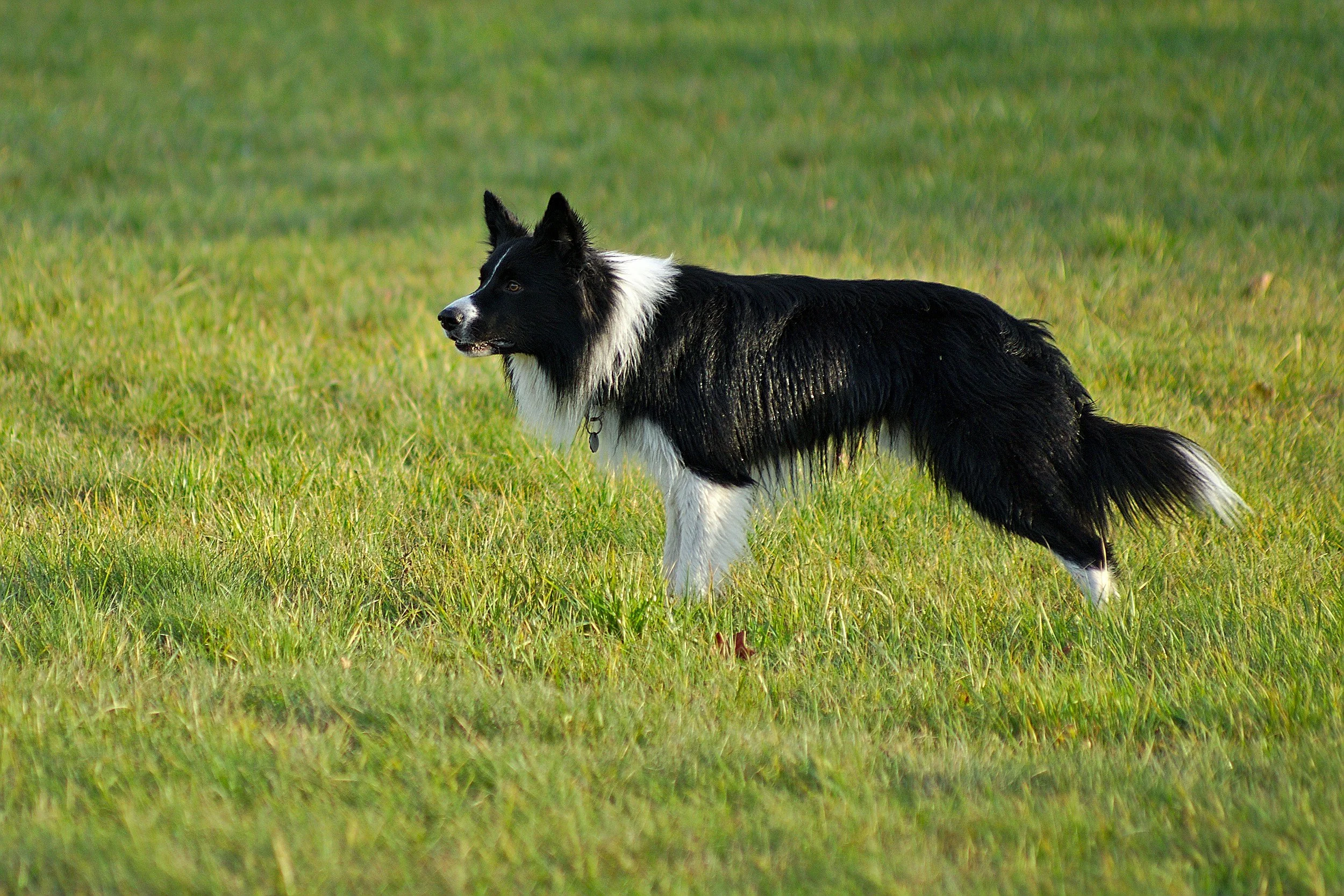
Consider a Border Collie entering a dog park. It lowers its head, freezes its body, fixes an unblinking gaze onto an approaching dog, and stalks forward step-by-step. To the Collie, this inherited working motor pattern—selective breeding’s modification of the predatory sequence—is second nature. To the approaching dog, however, a sustained, head-lowered stare is a universal declaration of threat.
This creates immediate social ambiguity.
Because dogs carry formidable physical weaponry, navigating social ambiguity relies heavily on meta-communication: communication about how subsequent behaviors should be interpreted.
Play Styles
During social play, dogs routinely incorporate motor patterns borrowed from predatory, defensive, and agonistic contexts: chasing, stalking, grabbing, biting, wrestling, and body-slamming. During successful play, these potentially serious actions are surrounded by an informational frame that allows both dogs to interpret them as playful.
Inherited tendencies may make particular forms of play especially attractive. A herding dog may repeatedly stalk and chase. A sighthound may strongly favor pursuit games. A retriever may grab and carry toys or other objects. A terrier may favor rapid grabbing and shaking movements.
Because the same actions can carry very different meanings outside play, dogs rely on meta-communication:
Play bows are a wonderful example. Marc Bekoff described them as a form of behavioral “punctuation.” In his 1995 study, bows appeared in meaningful positions within play sequences, particularly before or after actions that could otherwise appear ambiguous. He proposed that the bow helps frame those actions by communicating:
“What I am about to do, or what I just did, is still play.”
Healthy, regulated play is also characterized by a flexible combination of the following features:
Exaggeration: Playful movements become looser, bouncier, and less efficient than their serious counterparts.
Reciprocity and role reversal: Both dogs participate in initiating and responding, and their roles may alternate. The pursuer becomes the pursued, or the dog on top allows the other dog to gain the advantage.
Frequent pauses: Brief interruptions allow both dogs to reassess the interaction and choose whether to re-engage.
Self-handicapping: A stronger, faster, or larger dog may voluntarily limit its physical advantage by slowing down, reducing the force of its movements, or dropping to the ground. This helps preserve a safe, mutually maintained interaction.
The precise combination varies, what truly matters is mutual responsiveness: each dog continually adjusts its behavior according to the other dog’s signals.
A chase preceded by a mutual invitation and punctuated by pauses or role reversals carries very different information from relentless pursuit after one dog has begun trying to disengage. Breed-specific play styles become easier to negotiate when both participants can clearly read the surrounding signals and remain responsive to one another.
Vocal “Dialects”
Vocal expression also varies considerably between dogs. Some provide an almost continuous acoustic commentary, accompanying social interactions with barks, grumbles, whines, and prolonged, dramatic play growls. Others move through the same exchanges almost silently, placing more communicative weight on posture, facial expression, movement, and spatial positioning.
These dogs share the same broad, multimodal communication system. Their dialect lies partly in how they distribute information across its auditory, visual, tactile, and olfactory channels.
Communication Handicaps: Structural Obscuration
A communication handicap occurs when an animal possesses the emotional state and behavioral intent to communicate, but its physical anatomy conceals, distorts, or eliminates the signal.
Dogs communicate visually through different channels:
eyes
ears
lips
muzzle
facial muscles
head position
body posture
tail
coat and body contour (piloerection)
orientation and movement
A communication handicap therefore changes how much information another dog can access through a particular channel. The receiving dog must rely more heavily on everything else.
In their 2024 facial-action coding study, Hobkirk and Twiss found that while wild wolves produce facial configurations that distinguish emotional states with high clarity, domestic dogs show significant overlap across friendly and fearful contexts. Head shape and ear morphology were identified as the primary physical features limiting the visibility and production of these expressions.
This structural obscuration is particularly dangerous because dogs rely on extremely subtle, micro-appeasement signals to de-escalate social tension. In a 2017 pilot study, Chiara Mariti and colleagues recorded 2,130 of these appeasement behaviors during dog-to-dog encounters; most frequently head turning, nose licking (lip wiping), freezing, and turning away. These signals spiked immediately following an aggressive display, and in most observed sequences where an appeasement signal was offered, the aggressive behavior subsequently decreased.
When physical structure conceals these tiny movements, the natural mechanism for social peace-keeping fails. Selective breeding has altered these structures across four major categories:
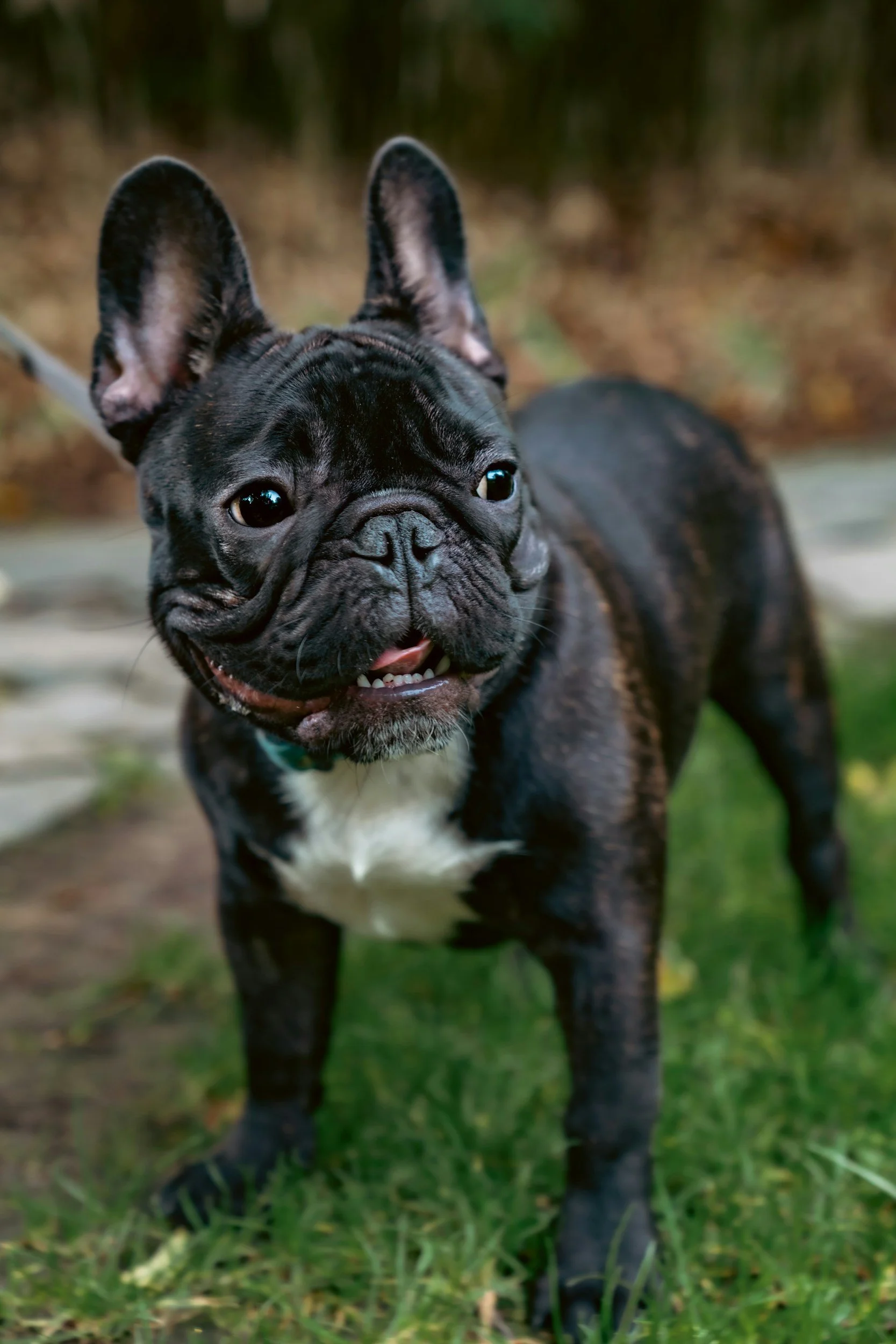
Facial Mechanics (Brachycephaly)
Flat-faced (brachycephalic) breeds like French Bulldogs, Pugs, and Boston Terriers face several hurdles in canine communication:
Structural Limitations: As ASPCA science advisor Dr. Stephen Zawistowski points out, "A Rottweiler can make a great lip pucker, but how on earth can a Bulldog pucker?" Their flattened muzzles physically prevent them from performing fine facial cues like subtle lip curls or muzzle-nudges.
Accidental Aggression: Wrinkled foreheads (which in wolves signify intense arousal or threat), bulging eyes, and forward-leaning squared postures cause other dogs to read a Frenchie's neutral stance as a tense and hostile.
Vocal Misinterpretations: Heavy breathing, snorting, and wheezing caused by shortened airways can be misheard by other dogs as low growles, triggering defensive reactions.
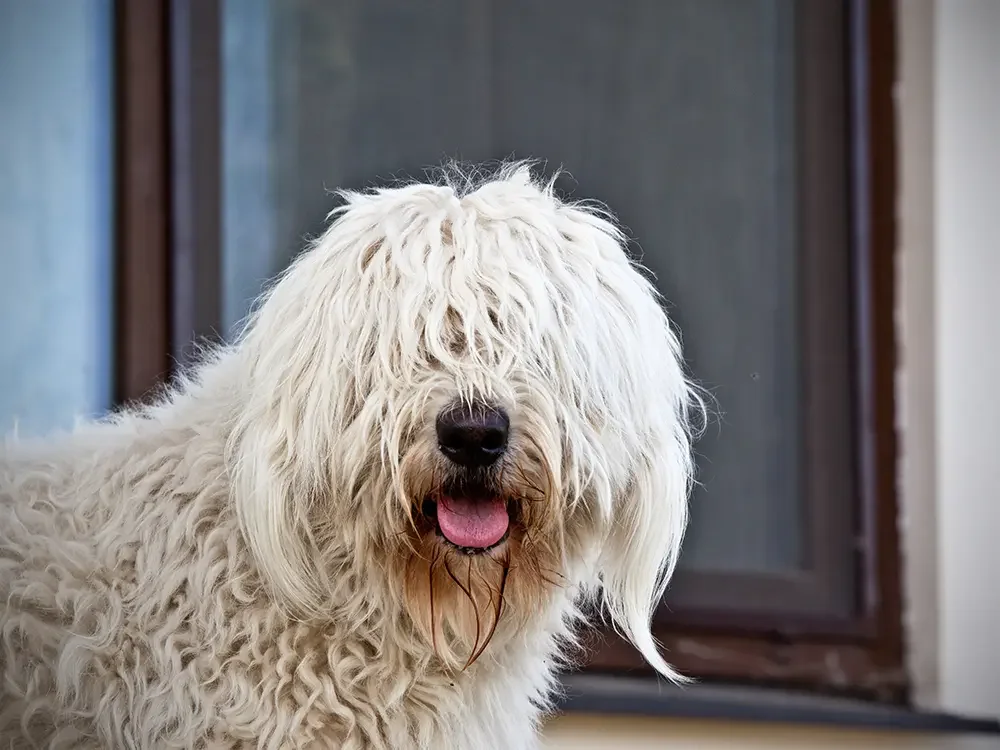
Coat Coverage:
Coat can create a similar handicap through a different mechanism.
A heavily coated dog may retain full facial movement underneath the hair, it’s simply harder for another dog to see.
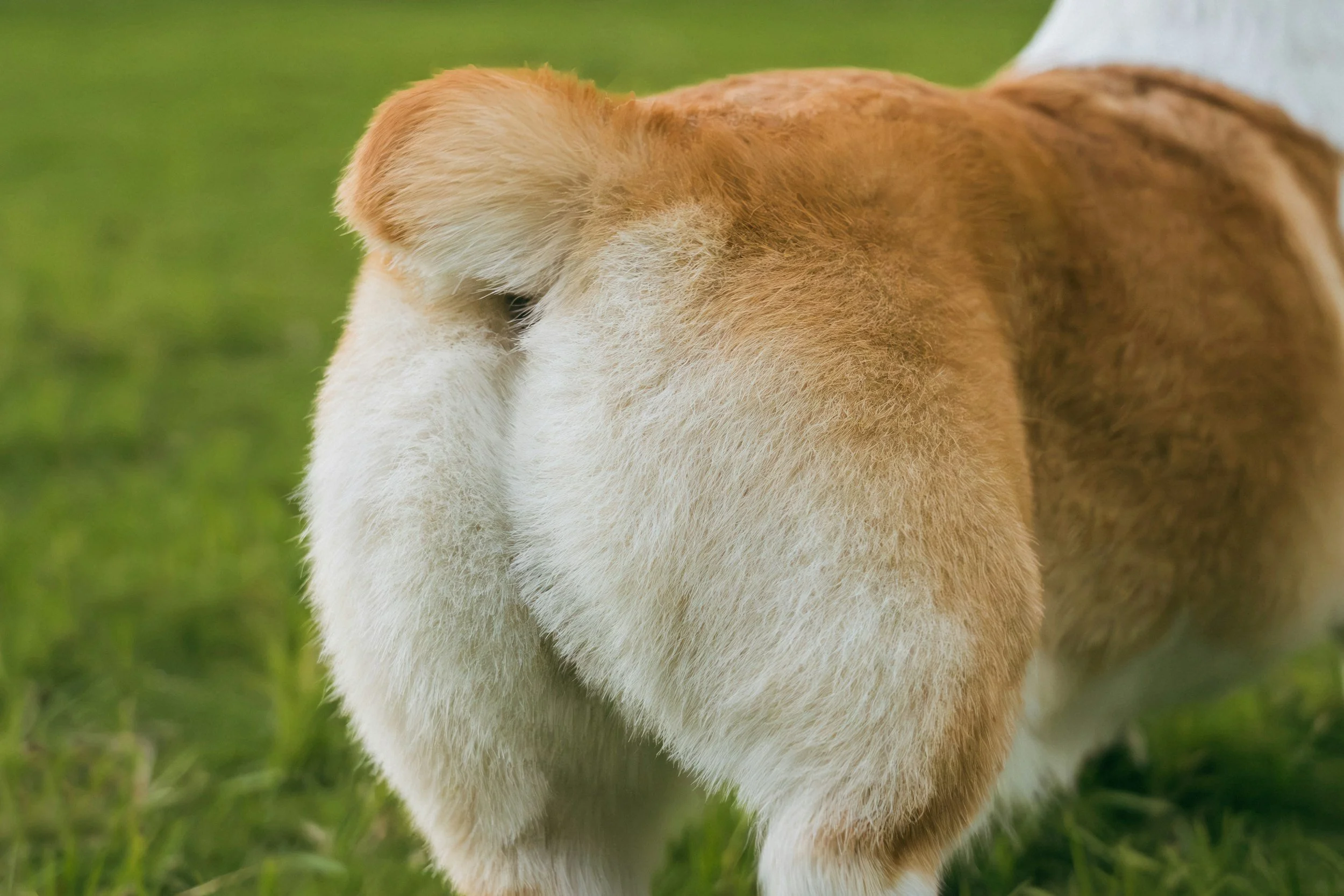
Tail Integrity & Docking:
Tails are a dog's primary emotional loudspeaker.
Docking a tail acts like a permanent speech impediment in canine social environments.
In a groundbreaking 2008 study by researchers K. Leaver and T.E. Reimchen (Applied Animal Behaviour Science), scientists tested how 492 off leash real dogs interacted with a life-sized, remotely controlled robotic dog.
When the robotic dog had a long, wagging tail, real dogs approached it readily, calmly, and with confident social curiosity.
When the robot's tail was shortened (docked), real dogs approached with extreme hesitation, freeze responses, and social stress.
A tail can communicate through variations in:
height
direction
muscular tension
speed
amplitude
lateral movement
overall carriage
Shortening the tail reduces the physical structure available to display those changes. Without a visible tail to gauge intent, the observing dogs couldn't tell if the robot was friendly or dangerous.
Altered Anatomical Baselines:
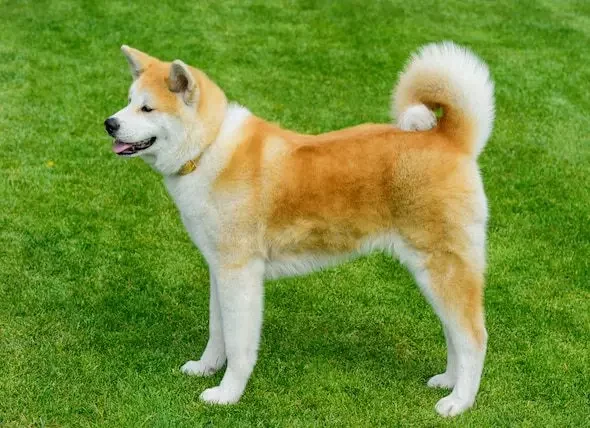
A tightly curled tail begins from a very different resting position from a long, relatively straight tail. A naturally erect ear has a different visible range of movement from a long pendulous ear.
The receiving dog therefore has to interpret movement relative to the baseline anatomy of that individual.
Practical Application: The Handler's Role
While safe social exposure helps dogs learn that different body types have different baselines, exposure alone is not enough. If interactions are chaotic, a dog learns fear rather than familiarity.
When a dog possesses a communication handicap, human handlers must provide environmental support: increased physical distance, slower introductions, shorter play bouts, clear disengagement routes, and proactive intervention before subtle, obscured signals are forced to escalate into overt conflict.
Gaining Human Dialogue
The Kaminski Study
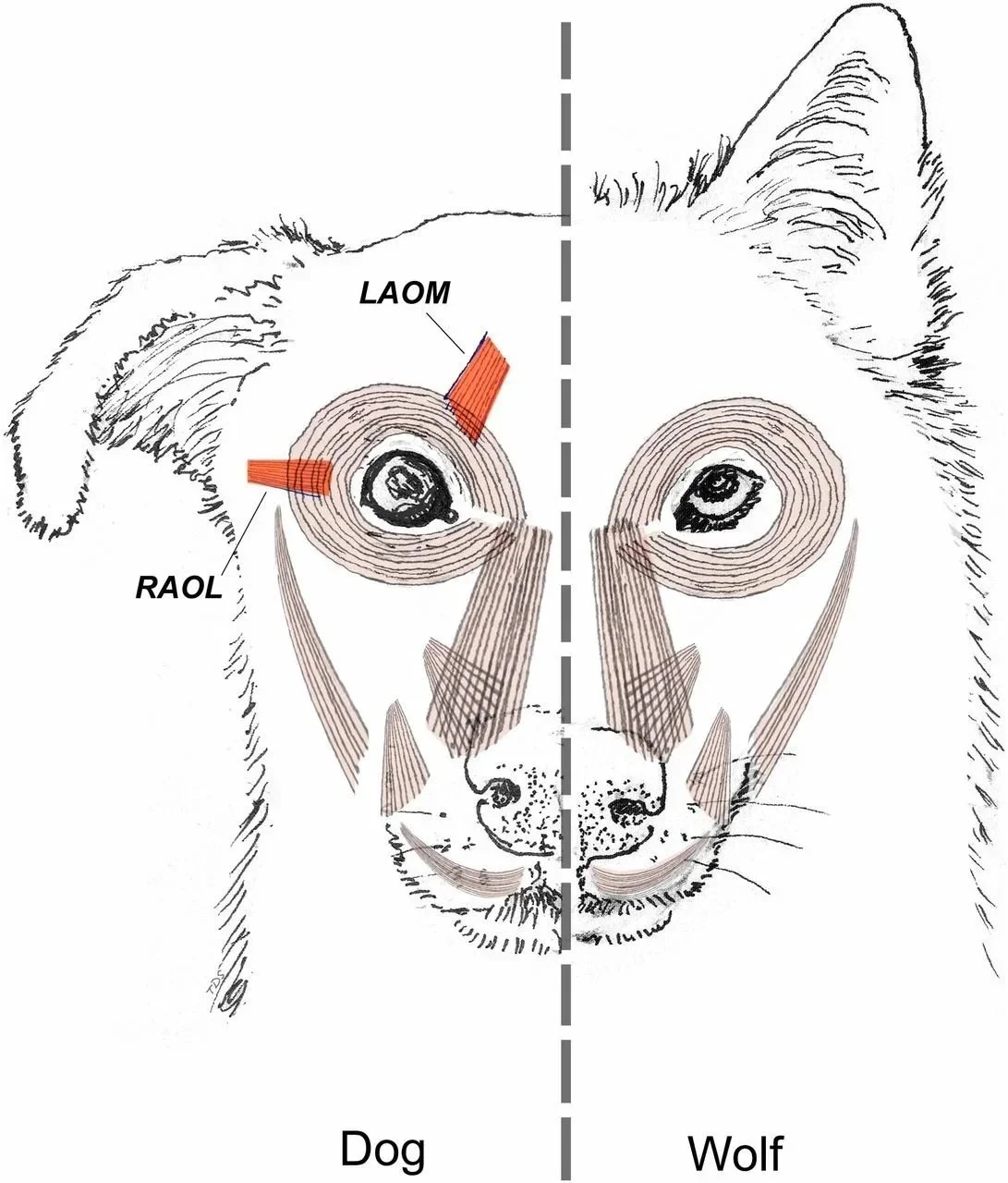
Facial musculature in the wolf (C. lupus) (animal’s left) and dog (C. familiaris) (right) with differences in anatomy highlighted in red. Image courtesy of Tim D. Smith (Cambridge University Press, Cambridge, UK).
While domestication stripped away many of the complex visual signals dogs once used to communicate with each other, it didn't simply break canine communication, it redirected it toward a completely new audience: us.
As dogs adapted increasingly closely to humans, their communication with us also became highly specialized.
Dogs, more than any other animal, are exceptionally sensitive to:
human gaze
gestures
body orientation
attention
pointing
social availability
Some of this specialization appears directly in the anatomy of the dog's face.
In a groundbreaking 2019 study published in PNAS (Proceedings of the National Academy of Sciences), Dr. Juliane Kaminski and her research team conducted detailed anatomical dissections and behavioral comparisons between domestic dogs and wild gray wolves.
They discovered a striking anatomical difference: domestic dogs possess a specialized facial muscle that wild wolves almost entirely lack.
The levator anguli oculi medialis, or LAOM, raises the inner portion of the eyebrow.
The movement changes the visible appearance of the eye, creating the characteristic raised inner brow often described as “puppy-dog eyes.”
To the human brain, this movement mimics the exact eyebrow shift humans make when displaying sadness, empathy, or vulnerability. When ancient dogs made this expression, human handlers experienced an unconscious spike in nurturing hormones (like oxytocin). Humans naturally responded by giving those specific dogs more food, protection, shelter, and affection, giving dogs with the muscle mutation a massive survival advantage.
Kaminski and her colleagues proposed that human responsiveness to this expression may have created selection pressure favoring dogs capable of producing it more strongly.
Here, selection appears to have altered the physical machinery of communication itself.
Dogs Change Their Faces When We Look at Them
A separate 2017 experiment from Kaminski's research group examined whether human attention affected canine facial expression.
Dogs interacted with a person who either faced them, or turned away from them. Food was also either present or absent.
The dogs produced significantly more facial movements while the person was visually attending to them.
The inner-brow raiser was among the movements particularly associated with human attention.
Human attention therefore affects the production of canine facial expressions.
Together, these studies reveal an extraordinary part of domestication.
Dogs evolved within a social environment containing another species, and aspects of their facial anatomy and expressive behavior became increasingly responsive to human observers.
The dog's face became relevant to two communication systems at once: dog to dog, and dog to human.
In terms of evolutionary fitness, losing a few words in their canine dialect was a remarkably small price to pay for securing a permanent place alongside humanity.
How Behavior and Appearance May Have Become Linked
How did selecting for a mental trait such as friendliness, end up physically reshaping ears, tails, snouts, and fur colors?
For decades, evolutionary biologists wrestled with why domestic animals across vastly different species all seem to share a distinct cluster of physical traits: floppy ears, curly tails, spotted coats, shorter muzzles, and juvenile behaviors. This constellation of physical and behavioral changes is known as "Domestication Syndrome".
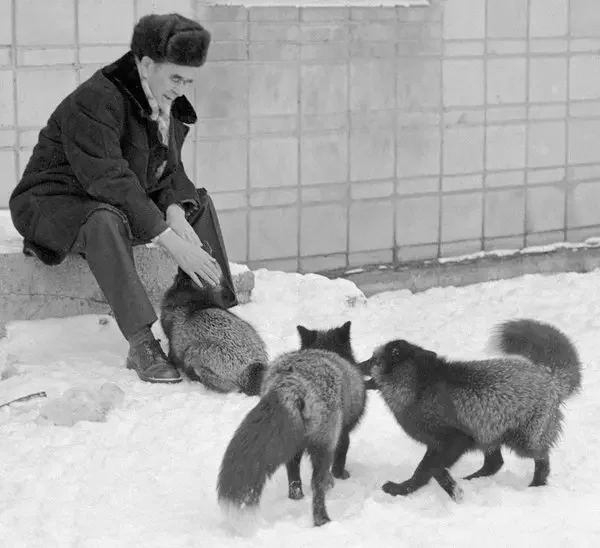
Dmitry Belyaev
The Belyaev Fox Experiment: Selecting for Tameness
One important clue comes from Dmitry Belyaev and Lyudmila Trut’s long-running silver fox experiment. Beginning in the late 1950s, the researchers selectively bred foxes from fur-farm populations according to their responses to humans.
They wanted to test whether the entire transformation from a wild animal to a domestic companion could be triggered by selecting for a single psychological trait: lack of fear and aggression toward humans.
Generation 1
Selected ONLY for:
Tameness & Low Fear
Generation 6–10+
"Domestication Syndrome" Unintentionally Appears:
- Tail wagging & whining
- Floppy, drooping ears
- Piebald / star coat patches
- Shorter, rounded snouts
- Curly tails
The speed of the transformation shocked the scientific world. Within just a few generations, the foxes stop biting, and began actively seeking human contact, whining for attention, licking researchers' hands, and wagging their tails.
But then, the physical body followed the mind. Without any intentional breeding for appearance, the tame foxes began displaying floppy, drooping ears, piebald coats, rolled or curly tails, shorter, wider snouts, rounder, more juvenile skulls, and altered hormonal cycles.
The experiment demonstrated a powerful evolutionary principle:
Strong selection on behavior can produce correlated changes elsewhere in the body.
Genes, hormones, tissues, and developmental systems interact. Selection acting strongly on one part of that system can therefore influence other traits through shared biological pathways.
The experiment demonstrated that strong selection on behavior can coincide with changes elsewhere in the body. Exactly how those changes became linked remains an open scientific question. In 2014, Adam Wilkins, Richard Wrangham, and W. Tecumseh Fitch proposed one influential possible explanation: the neural crest hypothesis.
Neural crest cells are a temporary population of embryonic cells that migrate throughout the developing body and contribute to several systems, including pigmentation, craniofacial structures, ear cartilage, parts of the peripheral nervous system, and the adrenal medulla. The hypothesis proposes that selection for reduced fear and aggression may have altered neural crest development, indirectly producing some of the physical traits commonly associated with domesticated animals.
The neural crest hypothesis offers an elegant developmental explanation for how behavior and appearance might change together, but it remains a hypothesis rather than an established account of domestication.
During early embryonic development, a specialized group of stem cells forms along the developing spine called the neural crest. These neural crest cells act like cellular construction workers, migrating throughout the growing embryo to build several seemingly unrelated bodily systems:
The Adrenal System (Fear & Stress): Neural crest cells form the adrenal glands, which produce adrenaline and cortisol—the hormones that drive wild fear, aggression, and the "fight-or-flight" response.
Craniofacial Structure & Cartilage: Neural crest cells form the bones of the face, teeth, and the firm cartilage that holds ears erect.
Pigmentation: Neural crest cells form melanocytes, the cells responsible for distributing pigment (color) to skin and fur.
Researchers continue to debate whether domesticated species share a consistent “domestication syndrome,” whether neural crest development provides a common mechanism, and how much of the observed variation results from later selective breeding, captivity, environmental conditions, or other developmental pathways.
What we can say with greater confidence is that behavior and physical appearance develop through interconnected biological systems. Selection acting strongly on behavior can produce correlated changes elsewhere, while later functional and aesthetic selection can reshape those traits again.
The dog standing in front of us is therefore the accumulated result of many overlapping selective histories: adaptation to humans, specialization for work, and deliberate breeding for physical type. Its appearance influences what it can display, its inherited behavior influences what it tends to perform, and its experience influences how successfully it communicates with others.
COMING UP NEXT UP:
Why Dogs Need Parents
If dogs retain important juvenile characteristics into adulthood, what does that mean for how we should train and live with them?
In our next article, we’ll explore wolf family dynamics, challenge the myth of the “alpha male,” and examine why dogs need parents.
References
Goodwin, D., Bradshaw, J. W. S., & Wickens, S. M. (1997).Paedomorphosis affects agonistic visual signals in domestic dogs. Animal Behaviour, 53(2), 297–304.
Coppinger, R., & Coppinger, L. (2001).Dogs: A Startling New Understanding of Canine Origin, Behavior & Evolution. New York: Scribner.
Belyaev, D. K. (1979).Destabilizing selection as a factor in domestication. The Journal of Heredity, 70(5), 301–308.
Wayne, R. K. (1986).Cranial Morphology of Domestic and Wild Canids: The Influence of Development on Morphological Change. Evolution, 40(2), 243–261.
Leaver, S. D., & Reimchen, T. E. (2008).Responses of domestic dogs (Canis familiaris) to a silhouette model of a dog with different tail positions and lengths. Applied Animal Behaviour Science, 110(3-4), 312–326.
Kaminski, J., Waller, B. M., Diogo, R., Hartstone-Rose, A., & Burrows, A. M. (2019).Evolution of facial muscle anatomy in dogs. Proceedings of the National Academy of Sciences (PNAS), 116(29), 14677–14681.
Correia Caeiro, C., Guo, K., & Mills, D. S. (2018).Dogs and humans respond to emotional cues in canine facial expressions. Scientific Reports, 8(1), 1–10.
[Disclaimer: This article is for informational purposes and does not substitute veterinary or professional behavioral advice.]