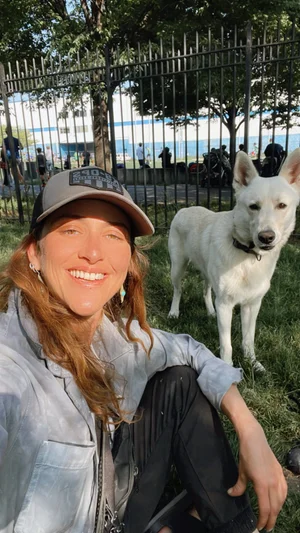

RUNNING WITH WOLVES & WHY WE DON'T JOG WITH CATS
Exploring the Human-Dog Connection
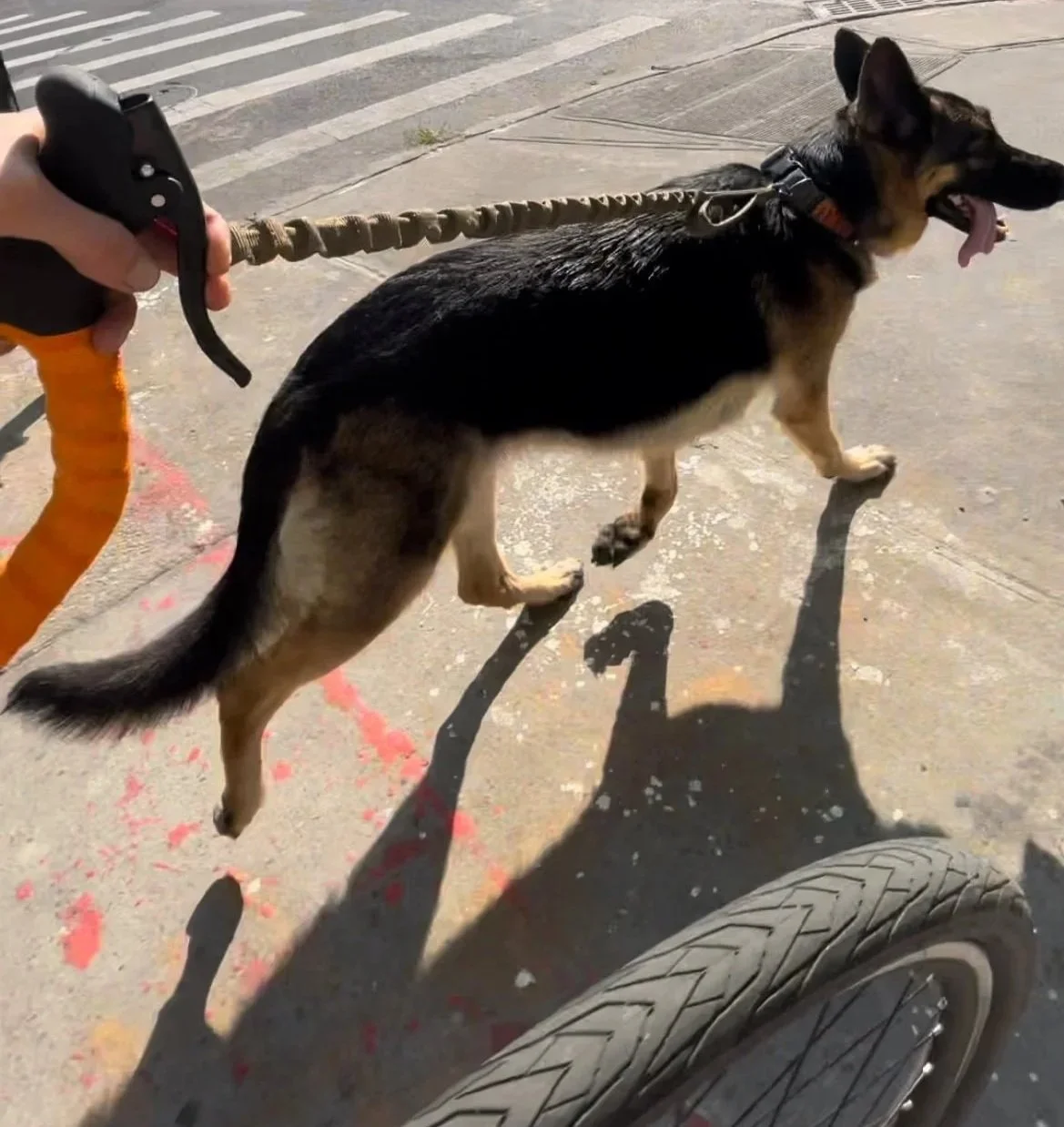
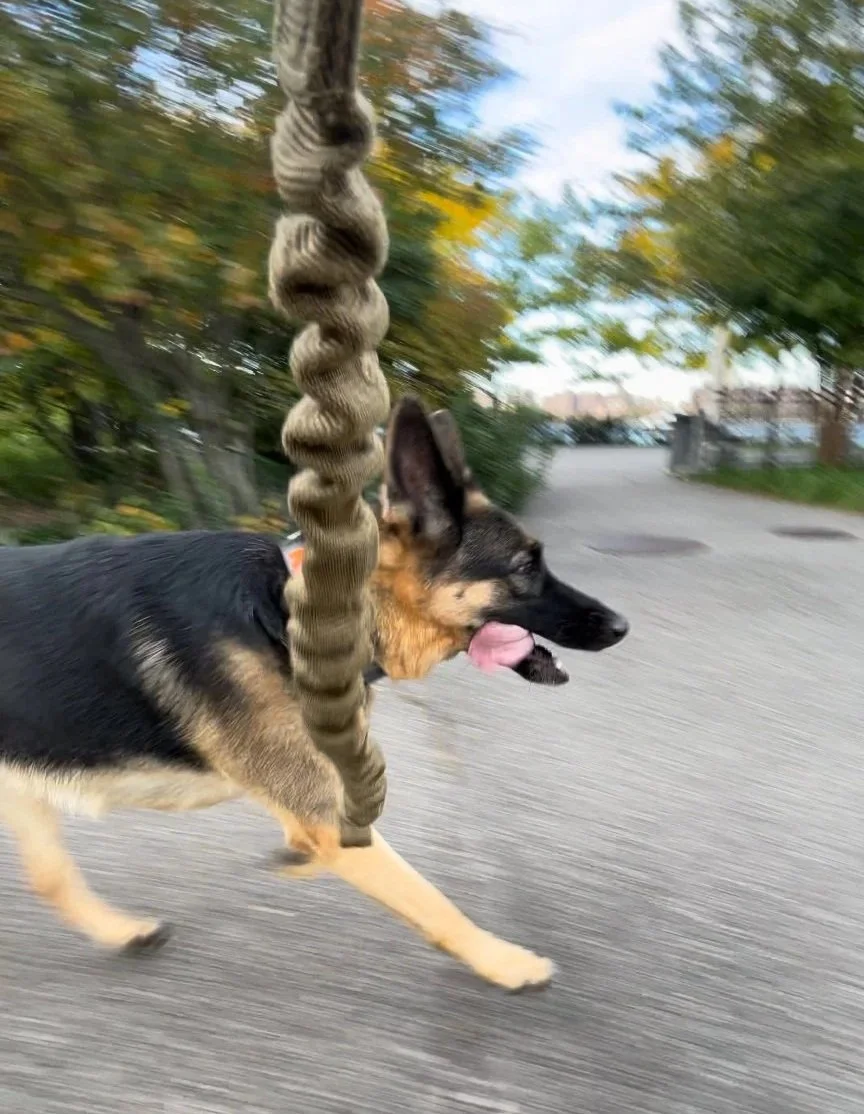
Me and Kalani, a German Shepherd I helped rehabilitate from reactive aggression, made her greatest progress through our regular bike rides.
Have you ever wondered why you never see folks jogging with their cats, ferrets, or rabbits?
Or have you ever wondered why, among all primates, only humans evolved to run long distances?
The bond between humans and dogs is also rooted in our shared love for running, a connection forged over millennia of evolution.
Both human and canine brains are wired to experience a 'runner’s high': an evolutionary mechanism that may have helped make long-distance running a fundamental skill."
Recent research sheds light on the fascinating role of endocannabinoids in enhancing the pleasure of running, highlighting the unique bond between humans and their canine companions.

The Role of Endocannabinoids
Endocannabinoids, the body's natural pleasure chemicals, have emerged as the primary source of the "runner's high," replacing the previously attributed endorphins.
"Endocannabinoids are molecules that are often referred to as the body's own marijuana-like substances because they activate similar cellular receptors," explained Gerdeman, a biologist at Eckerd College in St. Petersburg, Florida. These molecules are similar to the cannabinoids found in the cannabis sativa plant, but they are naturally produced by the human and canine body. (The term “endo” refers to “within,” as in within the body).
Anandamide, a key endocannabinoid linked to motivation and anxiety reduction, plays a central role in this response. A study led by David Raichlen at the University of Arizona examined this phenomenon. The team conducted experiments with ten humans, eight dogs, and eight ferrets. Blood samples taken before and after 30 minutes of treadmill exercise revealed increased levels of anandamide, a type of endocannabinoid, in both humans and dogs post-exercise. . Ferrets, selected as non-cursorial mammals for contrast, showed no such changes (Raichlen et al., 2012).
This indicates that the enjoyment of running is species-specific and not universal among mammals. While ferrets and cats are excellent sprinters, they derive no pleasure from running long distances. For them, running is not part of their natural history.
This underscores the unique bond between humans and dogs, offering a glimpse into our shared evolutionary past and neurobiological features.
Runner's High and Evolutionary Advantages
The findings may hint at what pushed humans to evolve for long-distance running, a practice that is not only exhausting but also "makes you prone to injury in a predator-dominated world," noted Gerdeman. If early humans experienced a runner's high, he added, "that's the neurological reward. It would have promoted repeated behaviors. But the real evolutionary payoff would have been an improved chance of survival and reproduction because of those behaviors."
While the runner’s high doesn’t directly enhance physical endurance, it reinforces running behavior by providing a pleasurable neurochemical reward after sustained effort. Over time, this emotional payoff increased the likelihood of repeating long-distance activities, which in turn improved stamina and cardiovascular fitness.
For early hunter-gatherers, that enhanced endurance offered a critical survival advantage: it enabled them to outlast prey like gazelles, which can sprint quickly but overheat or tire in prolonged chases. This persistence hunting strategy likely improved hunting success and, ultimately, reproductive fitness.
Dan Lieberman, a human evolutionary biologist at Harvard University, suggests that runner's high might have also heightened alertness and intensified sensory perceptions. In a 2004 study, Lieberman and Dennis Bramble proposed that humans evolved to run long distances approximately two million years ago (Bramble & Lieberman, 2004).
Their hypothesis of “persistence hunting” (chasing animals until they overheat or collapse) is supported by modern examples among San Bushmen and the Hadza, whose endurance is matched only by their tracking skill.
The San and Hadza are two of the most frequently studied Indigenous groups in anthropology and evolutionary biology, especially in discussions about human endurance running, persistence hunting, and ancestral lifestyles.
Anthropologists (like Daniel Lieberman) often study these groups because their lifestyle resembles that of early humans, especially in terms of physical activity patterns, which include:
Walking/jogging long distances daily
Minimal sedentary time
High physical endurance without formal training
This gives us real-world examples of how & why human bodies evolved.
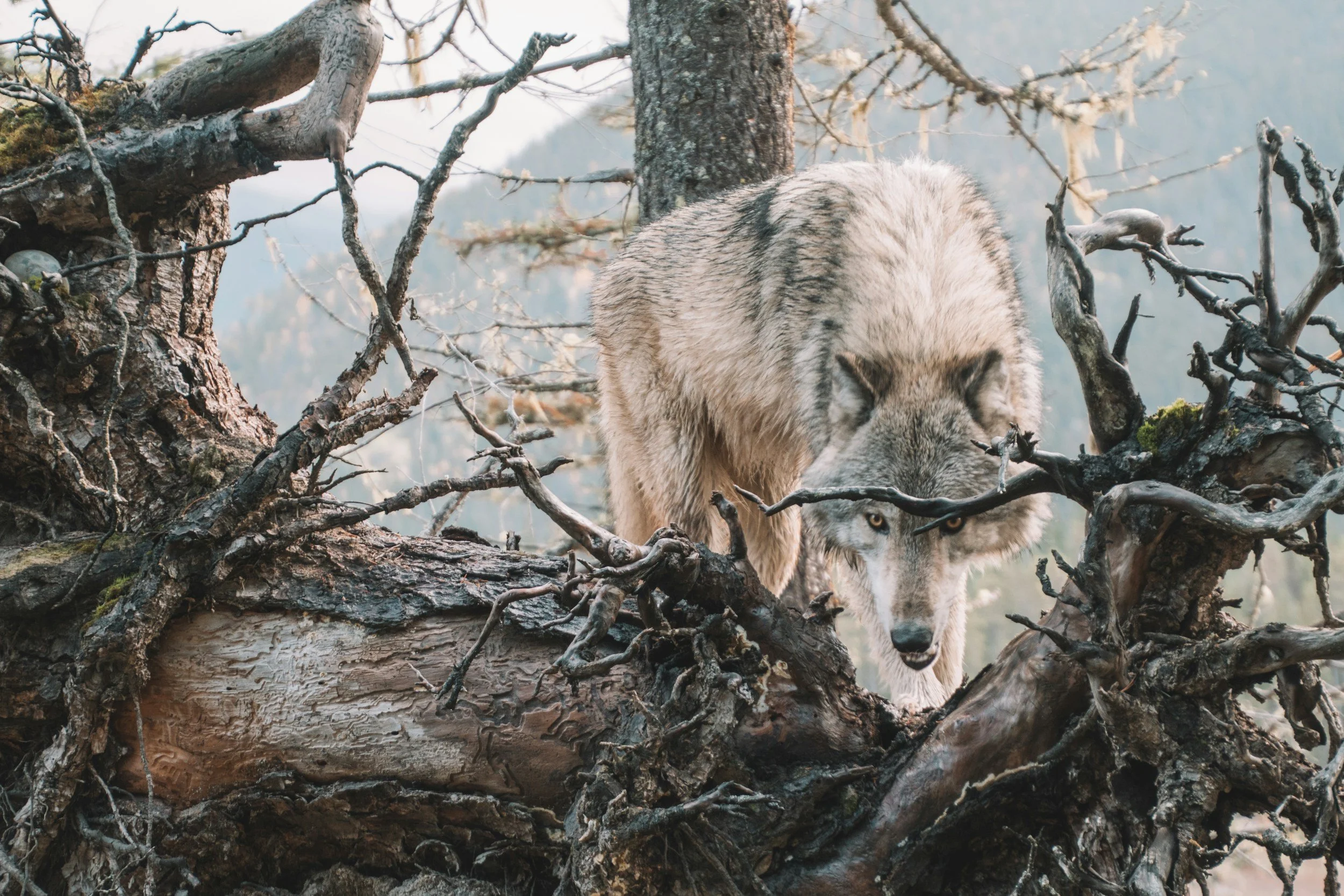
Humans and Wolves Evolved to be Athletes
Humans and wolves are recognized as some of the greatest endurance runners on Earth. Both species have evolved to excel in covering long distances at a steady pace without tiring quickly.
As previously discussed, in human history, endurance running played a crucial role in hunting and gathering, enabling our ancestors to chase down prey until the animals became exhausted. No other primates are capable of endurance running.
Anatomical features contributing to this ability of ours, such as springy tendons and short forearms, were heavily selected for in the genus Homo around 1.9 million years ago (Carrier, 1984). Paleoanthropological evidence suggests these anatomical adaptations were critical to our evolutionary success.
Similarly, wolves developed this capacity to hunt as cohesive packs, using teamwork, thermoregulation and endurance running to pursue their prey until it succumbs to exhaustion or overheating (Pugh et al., 2019).
This reflects a case of convergent evolution: two species evolving similar traits independently due to shared ecological pressures.
Although contemporary lifestyles may not demand hunting and gathering, our bodies retain an innate athleticism.
Unfortunately, many individuals are out of touch with their bodies, overlooking the significance of consistent physical activity despite our evolutionary heritage as “social athletes”.
Abandoning our innate drive for movement I personlly believe is one of the biggest reason modern sedentary and somewhat solitary life, led humanity to develop more and more chronic illness despite medicine becaming more diffuse
Cycling offers a similar state known as the "cyclist-high," providing an alternative for those who prefer biking over running, like myself. Whether pounding the pavement or cruising on two wheels, humans and dogs alike do more than “exercise”: We tap into this ancient brain chemistry.
The human capacity for endurance running is not merely psychological or neurochemical; it is anatomical.
We do not simply feel like runners. We are built like one.
Several distinct morphological adaptations distinguish Homo sapiens from other primates:
A long Achilles tendon capable of storing and releasing elastic energy with each stride
Enlarged gluteus maximus muscles that stabilize the trunk during sustained locomotion
Long lower limbs relative to body size, increasing stride efficiency
Shortened toes, reducing distal limb mass and improving running economy
An exceptionally high density of eccrine sweat glands distributed across nearly the entire body surface
This last adaptation is particularly significant. Unlike most mammals, which rely primarily on panting for thermoregulation, humans cool themselves through evaporative sweating. We are, quite literally, covered in sweat glands. This allows for prolonged activity under heat stress, which is a decisive advantage during endurance pursuits.
We are not built for explosive speed.
We are built for persistence.
Wolves (and by extension domestic dogs) evolved parallel adaptations favoring endurance over sprinting. Rather than relying solely on rapid bursts, wolves sustain a steady, energy-efficient trot over long distances. They track. They conserve energy. They outlast.
This represents a case of convergent evolution: two distinct species shaped independently by similar ecological pressures favoring endurance locomotion and cooperative pursuit strategies.
And eventually, those two endurance specialists found each other.
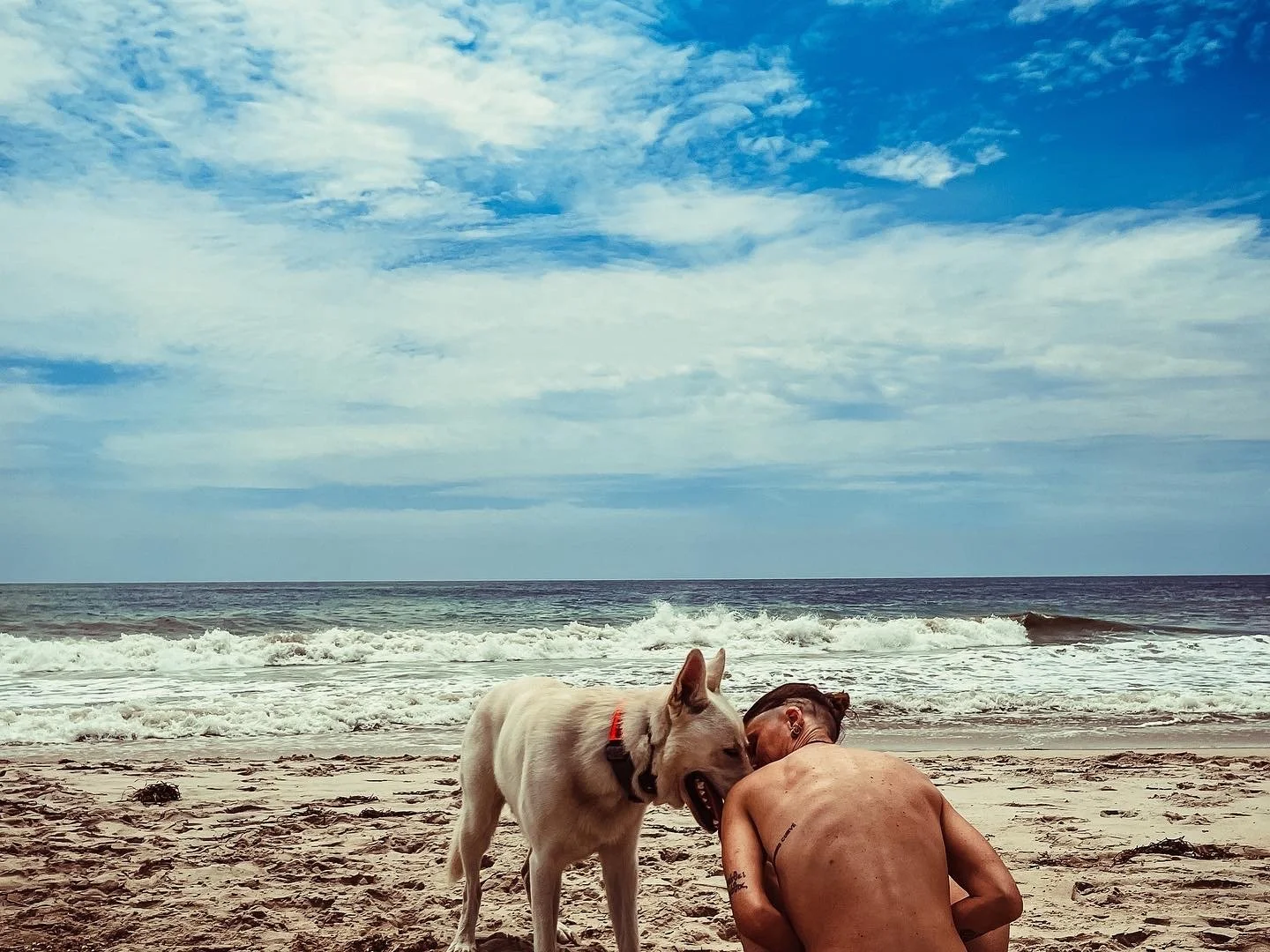
Our Shared Neurobiology
Evolutionary Reinforcement Mechanisms in Humans and DogsThe evolutionary partnership between humans and dogs extends beyond shared locomotor adaptations.
Increasing evidence from neuroendocrinology and behavioral science suggests that domestication shaped convergent and reciprocal reinforcement systems in both species, transforming a hunting alliance into a deeply integrated socio-emotional bond.
01
Oxytocin-Mediated Bonding and the Gaze Loop
One of the most compelling demonstrations of this co-evolutionary neurobiology involves oxytocin, a neuropeptide central to mammalian social bonding, maternal attachment, and affiliative behavior.
In a landmark 2015 study published in Science, Nagasawa et al. demonstrated that mutual gazing between dogs and their human caregivers induces a significant rise in oxytocin levels in both species. The effect mirrors the oxytocin-mediated bonding observed between human mothers and infants. Notably, this reciprocal hormonal feedback loop was not observed in wolves, even when wolves had been hand-raised by humans. This finding suggests that the domestication process selected for dogs capable of engaging in sustained eye contact without triggering threat responses.
Eye contact in many species—including primates and wolves—is typically associated with dominance or aggression. That dogs evolved to use human-directed gaze as an affiliative signal represents a profound behavioral shift. Dogs not only tolerate human eye contact; they actively solicit it. They also demonstrate sensitivity to human facial expressions and emotional cues at levels rare in interspecies communication. These adaptations support the hypothesis that domestication favored individuals capable of activating human caregiving systems via gaze-induced oxytocin release.
While other species such as horses, rabbits, and even cats can elicit oxytocin release through tactile interaction and proximity, the mutual, gaze-mediated feedback loop appears uniquely robust in dogs. This distinction further underscores the depth of human-dog co-evolution.
02
Play, Neoteny, & Dopaminergic Learning Systems
Both humans and dogs exhibit prolonged juvenile traits into adulthood—a phenomenon known as neoteny. One behavioral manifestation of neoteny is sustained play behavior beyond sexual maturity.
Play serves not merely recreational functions but critical neurodevelopmental and social purposes. It activates dopaminergic pathways associated with reward and learning, reinforcing social fluency, impulse control, risk calibration, and cooperative interaction. In both species, play functions as a safe rehearsal space for complex social behaviors.
The preservation of adult play in dogs likely enhanced compatibility with humans, whose own social structures depend heavily on flexible cooperation and extended developmental periods. In this way, play became both a shared behavioral language and a neurochemically reinforced bonding mechanism.
03
The Dopaminergic Seeking System
The “seeking system,” as described in affective neuroscience, is a dopaminergic network that motivates organisms toward exploration, goal pursuit, and problem-solving. Both humans and dogs display strong activation of this system during tracking, searching, and foraging behaviors.
Dopamine release is particularly robust when a reward is uncertain but attainable—a neurobiological basis for what is colloquially described as “the thrill of the chase.” This system likely played a central role in persistence hunting and cooperative tracking, reinforcing not only food acquisition but also the behaviors necessary to achieve it.
The alignment of human and canine seeking systems would have enhanced collaborative hunting efficiency. Over time, this shared motivational circuitry became embedded not only in survival contexts but also in modern analogues such as search games, scent work, and even recreational exercise.
04
Pack Cohesion, Movement, & Emotional Regulation
In both ancestral human tribes and wolf packs, group cohesion conferred survival advantages. Close social proximity reduced vulnerability to predators, facilitated cooperative defense, and increased hunting success.
Neurophysiologically, social bonding lowers cortisol levels while increasing oxytocin and serotonin. Rhythmic, synchronized movement—such as walking, trotting, or migrating in groups—further enhances these regulatory effects. Sustained locomotion is associated with increased endocannabinoid signaling and parasympathetic activation, promoting emotional stability and stress reduction.
Sleeping in close proximity similarly decreases stress markers and increases vagal tone. These mechanisms help explain why shared movement and co-resting behaviors between humans and dogs produce measurable calming effects. Such interactions represent not mere companionship, but co-regulation grounded in shared evolutionary neurobiology.
05
Food Sharing & Cooperative Trust
Food sharing occupies a central role in human social systems, functioning as a ritualized expression of alliance and trust. In canids, food access is closely linked to social hierarchy and resource control.
During domestication, food provisioning by humans likely served as a powerful reinforcement mechanism. Dopamine and oxytocin release associated with feeding interactions strengthened affiliative bonds. Hand-feeding, in particular, may activate deeply ingrained alliance signals rooted in cooperative hunting and resource distribution.
06
Vocal Communication & Cross-Species Prosody
Dogs exhibit remarkable sensitivity to human vocal tone and prosody. Neuroimaging research suggests that canine brains process emotional tone in ways functionally analogous to human auditory-social networks. Both species respond to intonation patterns independent of lexical meaning.
This mutual tuning enhances responsiveness and reinforces affiliative interaction. Reward circuits activate not only through physical reinforcement but also through emotionally congruent vocal exchange.
Applied Evolution: Movement as Behavioral Rehabilitation
Real life applications: From Reactivity to RegulationThe neurobiological mechanisms described above are not confined to evolutionary history; they remain active in contemporary human-dog interactions and can be applied intentionally in behavioral rehabilitation.
To illustrate this, let’s consider the case of Kalani.
Fear-based reactivity in dogs is often associated with hyperactivation of the amygdala: the brain’s threat detection center.
When amygdala activation dominates, prefrontal cortical processes responsible for decision-making and impulse control are suppressed. The dog reacts reflexively rather than thoughtfully.
Rehabilitation, therefore, requires shifting the dog from a reactive state to a regulated state, transforming what might be termed a “reactive dog” into a “thinking dog.”
Case Study: Kalani
From Fear-Based Reactivity to Regulated Engagement
Kalani was rescued from a background of severe neglect. She had spent much of her early life tethered in isolation, deprived of stimulation, social exposure, and structured interaction. When she was adopted, she displayed pronounced fear-based reactivity toward unfamiliar people and dogs. Her behavioral profile was characterized by hypervigilance, explosive responses to environmental stimuli, and difficulty disengaging once aroused.
Neurobiologically, such presentations are consistent with chronic amygdala overactivation. The amygdala functions as the brain’s threat detection system. When persistently engaged, it suppresses prefrontal cortical processes responsible for impulse control, flexible decision-making, and critical evaluation. In this state, behavior becomes reflexive rather than deliberate.
Kalani was not disobedient. She was incredibly overwhelmed, by everything.
The rehabilitative goal, therefore, was not obedience in the conventional sense. It was confidence. More precisely, it was the restoration of cognitive agency, transforming a reactive dog into what I call a “thinking dog.”
To explore the full rehabilitation framework I used with Kalani, including cue conditioning, spatial threshold management, and reinforcement strategy, stay tuned for an upcoming episode dedicated entirely to Kalani’s behavioral rewiring.
For now, I will focus on Step Three of her protocol, as it is directly relevant to this discussion and illustrates how ancestral movement can be intentionally applied in modern rehabilitation.
Kalani’s Protocol | STEP 03:
Movement as Neurochemical Regulation
One of the most significant components of Kalani’s rehabilitation involved sustained rhythmic movement — specifically, structured bike rides.
As discussed earlier, the natural gait sustained by humans and wolves during cooperative hunting is a trot. Not a gallop. Not a walk. A steady, rhythmic trot.
The only realistic way for a human to match the trotting pace of a dog, (especcially a large dog like Kalani ), for extended periods, is by using a bicycle, (or another wheeled devices). The bicycle served a dual purpose: it allowed me to match her natural gait and also functioned as a physical barrier, enabling spatial and emotional management of environmental triggers.
These sessions were not simply about “burning energy.”
They activated multiple regulatory systems simultaneously:
Dopaminergic activation through forward locomotion and goal-directed movement
Endocannabinoid release through sustained effort
Reduction of cortisol via rhythmic, repetitive motion
Increased confidence through repeated mastery experiences
Sustained rhythmic movement provides predictable sensory input. It channels arousal into coordinated motor output rather than defensive reactivity.
It is neurologically incompatible to remain in a full sympathetic fight-or-flight state while engaged in structured, rhythmic locomotion alongside a trusted partner. Over time, Kalani’s nervous system recalibrated. Vigilance decreased. Engagement increased.
Her behavioral profile shifted from scanning for threats to orienting toward purpose.
Movement gave her nervous system a job.
Conclusion
Kalani’s rehabilitation was not separate from evolutionary biology. It was an intentional application of it.
Humans evolved to run.
Dogs evolved to run.
Both species share neurochemical reinforcement systems shaped by survival demands.
Movement regulates the brain.
Shared movement builds trust.
Reinforcement rewires behavior.
The evolutionary systems that once enabled cooperative hunting now support interspecies emotional regulation and behavioral transformation. What began as an adaptive alliance became a co-regulated partnership, one still governed by ancient neurobiology.
Confidence does not arise from control. It arises from competence. And competence is built through movement, clarity, and reinforcement.
By embracing the joy of endurance activities like running, cycling, and hiking alongside our canine companions, we not only honor our shared history but also strengthen the bonds that enrich our lives, fostering a deeper connection and enriching the relationship in profound ways.
The bond between humans and dogs serves a deeper purpose than companionship alone. It fosters cooperation and mutual fitness, extending into co-regulation, shared neurobiology, and mutual wellbeing.
Some researchers speculate that our mutual love for running may have even played a role in domestication. Dogs who could keep up with humans gained access to food, protection, and social bonding, creating a neurochemical feedback loop of cooperation and trust.
In a world increasingly distant from our evolutionary roots, exercising with our dog is a reunion with your most ancient self.
Get out there and go run with your wolf!
References
Bramble, D. M., & Lieberman, D. E. (2004). Endurance running and the evolution of Homo. Nature, 432(7015), 345–352. https://doi.org/10.1038/nature03052
Carrier, D. R. (1984). The energetic paradox of human running and hominid evolution. Science, 347(6228), 654–657. https://doi.org/10.1126/science.347.6228.654
Pugh, L. G., Pyne, D. B., & Jenkins, D. G. (2019). Endurance running and thermoregulation in wolves. Journal of Thermal Biology, 82, 157–163. https://doi.org/10.1016/j.jtherbio.2019.04.003
Raichlen, D. A., Foster, A. D., & Gerdeman, G. L. (2012). Exercise-induced endocannabinoid signaling in humans and dogs. Scientific Reports, 2, 469. https://doi.org/10.1038/srep00469